By: Hannah Gabrielle R. Lautero
Many came to the Kalilangan Festival’s grand opening for one reason: to watch Cup of Joe perform live. Even as the rain poured, the crowd waited, ready for modern music, bright lights, and the thrill of a concert. What they did not expect, however, was to be welcomed first by a lesson in history and culture. And that, perhaps, was the most brilliant part of it all.
Before the band took the stage, the audience was treated to stories told through ancestral dances, traditional music, and living memory. In that moment, modern sound became a gateway to cultural education, proving that learning history does not always happen inside classrooms or through thick textbooks. Sometimes, it unfolds on a rain-soaked stage, beneath colorful lights, through movement and rhythm.
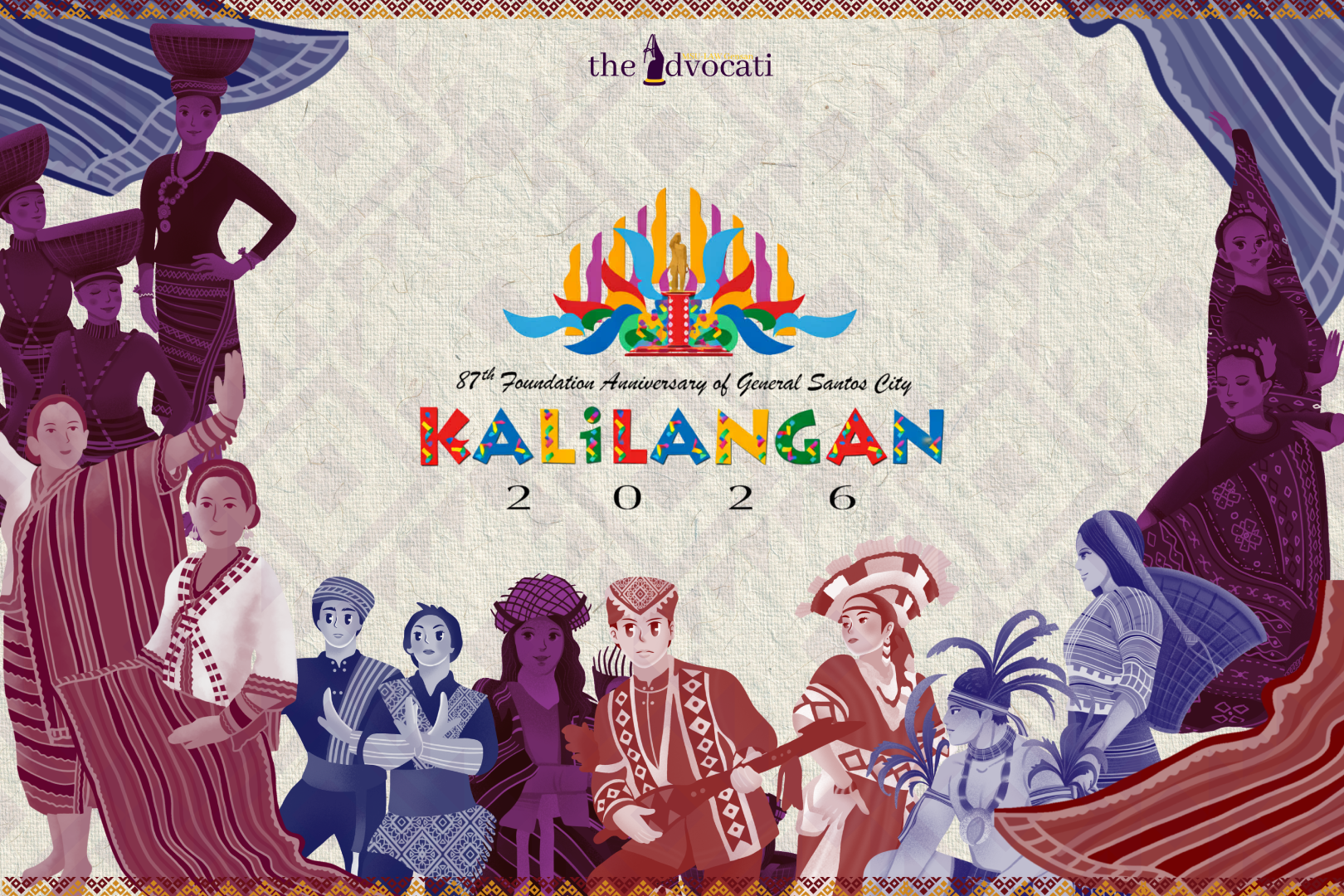
Behind the loud music and dazzling visuals that fill the city, the Kalilangan Festival has always carried a deeper narrative of transformation, unity, and cultural diversity. Derived from the Maguindanaoan word “kalilang,” meaning “to celebrate” or “to commemorate,” Kalilangan is observed every 27th of February in General Santos City to honor the tri-people culture: the Lumads, the Moro communities, and the Christian settlers.
From the sacred ceremonies, dances, and ancestral traditions of the Lumads, to the kulintang music and Islamic influences of the Moro communities, to the modern festivities of the Christian settlers, Kalilangan has long been a space where these three cultures are not only acknowledged but also celebrated together.
It would never be a true Kalilangan Festival without the performances of the Lumads and Moros, whose histories are preserved and retold through dance and music. During the opening, the Kabpapagariya Ensemble of Mindanao State University–GSC performed “Ang Pinagmulan: The Tale of the Almugan and the Papanok sa Lati of Rajah Buayan,” narrating the shared beginnings of the Lumads and Moros in Rajah Buayan. This has always been my favorite part—not just for its artistry, but for its power to teach.
The youths who gathered that night, hoping to see their favorite band, experienced a different kind of classroom. They learned the history of General Santos City not through lectures, but through performance, sound, and story. Kalilangan reminds us that progress is not synonymous with forgetting. Even amid modernization, the roots of a people must remain visible, respected, and alive.
Witnessing the Lumad, Moro, and Christian traditions on one stage reflects the very essence of respect and unity that Kalilangan stands for. In many ways, it embodies the spirit of the Indigenous Peoples’ Rights Act and the Constitutional guarantee to preserve and develop the cultures and traditions of indigenous cultural communities.
In college, we are taught that the histories of the Lumads, Moros, and Christian settlers are not without conflict, marked by displacement, discrimination, and struggles for self-governance. Kalilangan creates a space where these histories are not erased, but reframed, allowing dialogue, recognition, and mutual respect to flourish. It transforms narratives of division into a shared identity grounded in harmony and coexistence.
Amid rapid urbanization, Kalilangan continues to provide a vital platform where ancestral dances, rituals, and traditions are not merely preserved but performed, taught, and lived. The Kabpapagariya Ensemble’s performance, set against vibrant lights and a modern stage, proved that culture does not fade in modern times; it adapts and endures.
Away from textbooks, Kalilangan becomes a living classroom for the youth. It teaches that diversity exists within and around us, and that peace begins with understanding, pride in one’s roots, and respect for others.
In this sense, the Kalilangan Festival is more than a celebration. It is a legacy, a reminder of beginnings, a testament to cultural respect, and a living expression of unity among the diverse peoples of General Santos City.